

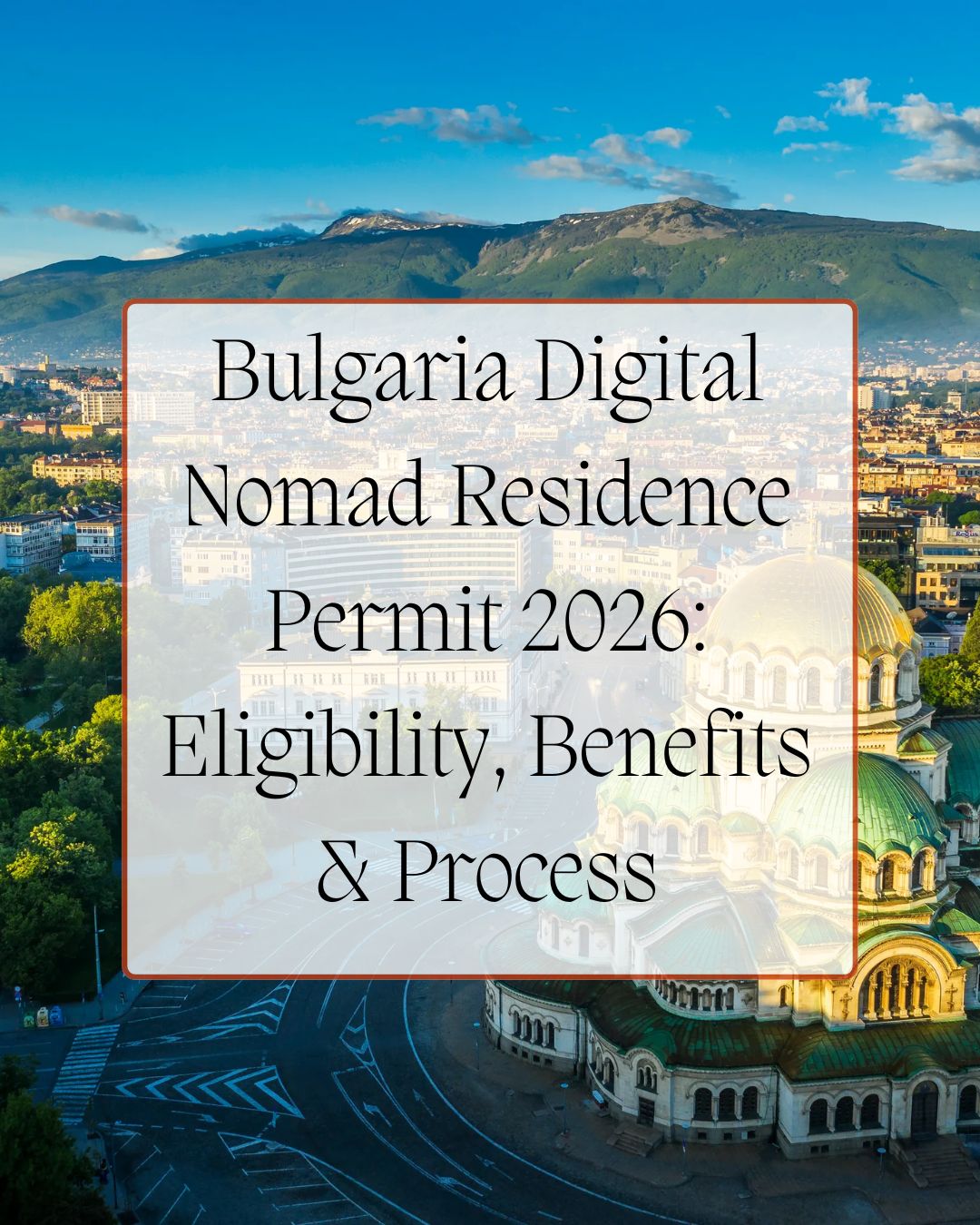
As remote work continues to grow globally, European countries are introducing special residence options to attract international professionals. Bulgaria’s Digital Nomad Residence Permit 2026 is designed for remote workers, freelancers, and online entrepreneurs who wish to live in Europe while working for foreign employers or clients.
With its EU membership, affordable living costs, and straightforward residency rules, Bulgaria is emerging as a top destination for digital nomads.
What Is the Bulgaria Digital Nomad Residence Permit?
The Bulgaria Digital Nomad Residence Permit allows non-EU nationals to legally reside in Bulgaria while working remotely for companies or clients located outside Bulgaria. The permit does not allow local employment but provides long-term legal stay and access to European lifestyle benefits.
This permit is suitable for:
Remote employees
Freelancers and consultants
IT professionals
Online business owners
Content creators and digital entrepreneurs
Eligibility Criteria for Bulgaria Digital Nomad Residence Permit 2026
Applicants must meet the following conditions:
1. Remote Work Proof
Employment contract with a foreign company, or
Freelance/service agreements with non-Bulgarian clients
2. Minimum Income Requirement
Stable monthly income sufficient to support living in Bulgaria
Income must be earned outside Bulgaria
3. Valid Passport
Passport valid for at least 12 months
4. Health Insurance
International or Bulgarian health insurance covering the stay period
5. Clean Criminal Record
Police clearance certificate from home country
6. Accommodation Proof
Rental agreement, invitation letter, or hotel booking in Bulgaria
Benefits of Bulgaria Digital Nomad Residence Permit
✔ Legal EU Residence
Live legally in an EU country without employer sponsorship.
✔ Affordable Cost of Living
Bulgaria offers one of the lowest living costs in Europe, ideal for long-term remote work.
✔ Favorable Tax Environment
Bulgaria has a flat personal income tax rate, making it attractive for global professionals (tax residency rules apply).
✔ Schengen Travel Access
Residents enjoy easier travel across Schengen countries.
✔ Family Reunification
Eligible applicants may bring spouse and dependent children.
Validity and Renewal
Residence permit is generally issued for up to 1 year
Renewable annually as long as eligibility requirements are met
Possibility to apply for long-term residence after continuous stay
Required Documents for Bulgaria Digital Nomad Permit
Valid passport
Remote employment or freelance contracts
Proof of income (bank statements, payslips)
Health insurance policy
Police clearance certificate
Proof of accommodation
Visa application forms and photographs
Application Process for Bulgaria Digital Nomad Residence Permit
Step 1: Document Preparation
Collect and legalize all required documents.
Step 2: Apply for Long-Stay Visa (Type D)
Submit application at the Bulgarian Embassy or Consulate in your country.
Step 3: Entry to Bulgaria
Travel to Bulgaria once the visa is approved.
Step 4: Residence Permit Application
Apply for the Digital Nomad Residence Permit card at the local immigration office.
Step 5: Biometric Submission & Approval
Submit biometrics and receive your residence card.
Why Choose Bulgaria for Remote Work in 2026?
EU membership with simple residency options
Strong internet infrastructure
Growing coworking spaces and digital nomad communities
Safe environment and high quality of life
Strategic location between Europe and Asia
Final Thoughts
The Bulgaria Digital Nomad Residence Permit 2026 is an excellent opportunity for remote workers seeking European residency without complex job sponsorships. With low costs, flexible rules, and EU benefits, Bulgaria stands out as a smart choice for digital nomads.